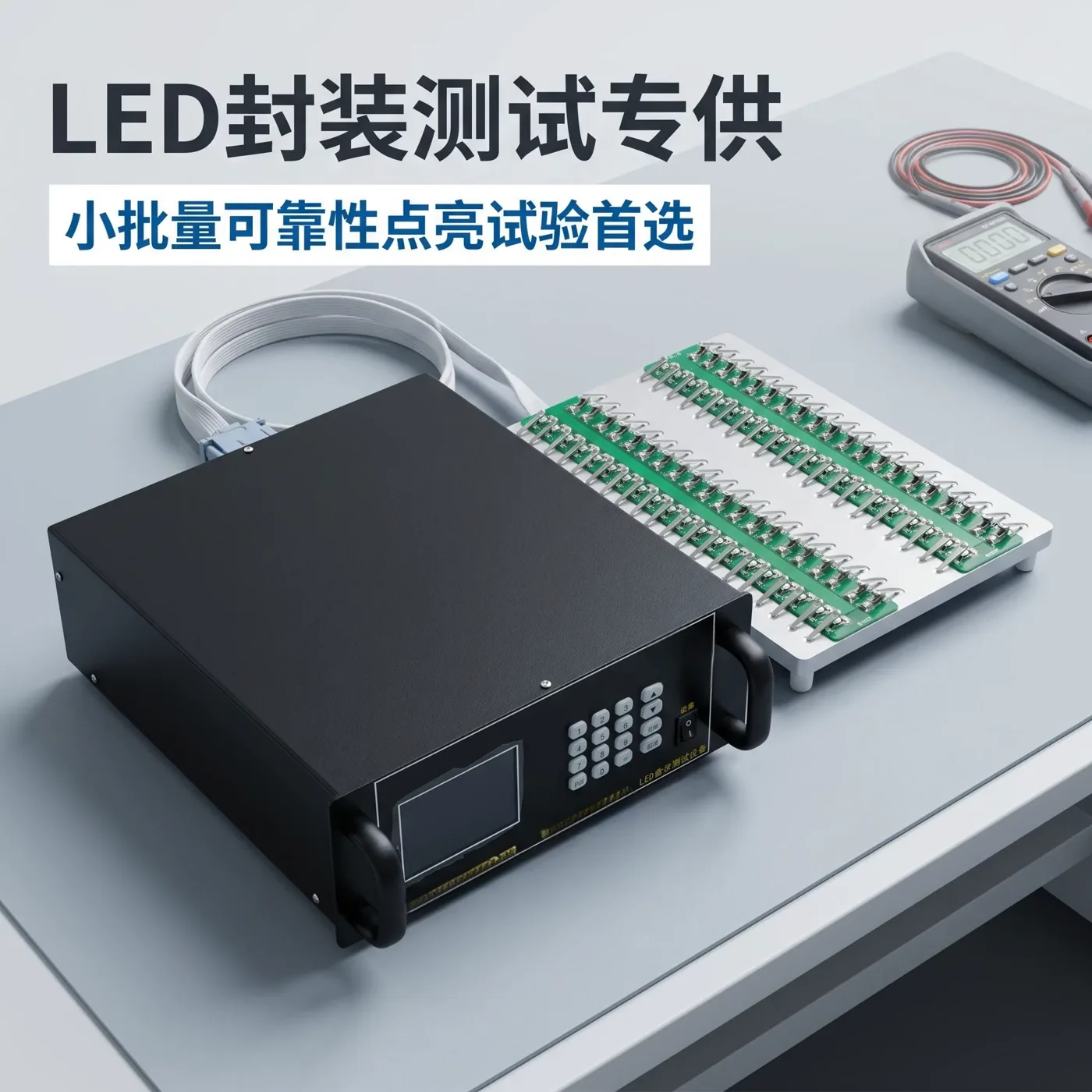
Summary
High-power LEDs concentrate heat. For batch aging, use a rack with proper heat dissipation to avoid junction temperature runaway.
The challenge
- High power per LED, concentrated heat
- Dense arrays create thermal stacking
- Higher junction temperature accelerates lumen decay and shifts wavelength
- Poor cooling makes data look worse than the LED actually is
Cooling methods
- Aluminum substrate / heat sink
- Thermal paste or thermal pad
- Fan and airflow design to avoid local hot spots
- Enough spacing between positions
- Water cooling or Peltier for extreme cases
Advantages of an aging rack
- More positions and power margin
- Dedicated thermal design
- Per-channel control and current logging
- Suitable for long continuous aging
Common mistakes
- Packing high-power LEDs densely on a standard board
- No thermal paste
- Fan airflow short-circuited, not reaching the LEDs
- Checking brightness only, not junction temperature
- Measurement conditions differ before and after aging
Need a high-power aging solution? Send the package, power and number of positions.
Need a test solution?
Tell us your LED package, test items and daily capacity. Our engineers will recommend a configuration.