Summary
How to measure LED reverse leakage current and use IR data to localize chip, package and ESD failures.
What IR measures
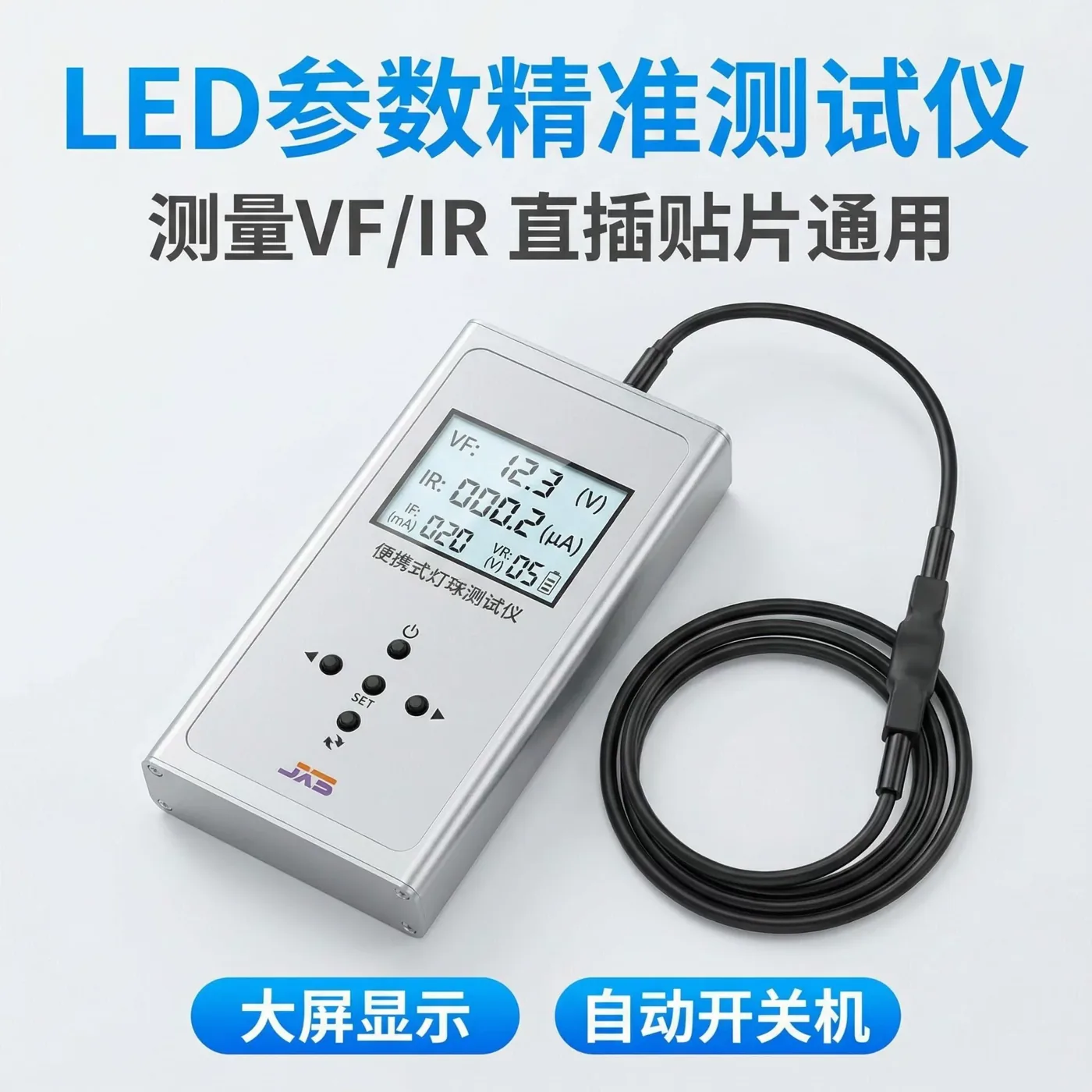
Reverse leakage current (IR) is the current that flows when a reverse voltage is applied. High IR indicates chip defects, contamination, moisture or ESD damage.
Test conditions
- Apply the reverse voltage specified in the datasheet
- Do not exceed the maximum reverse voltage
- Keep temperature stable
- Use a tester with adequate resolution
- Measure after the LED has stabilized
What high IR means
| Cause | Additional sign |
|---|---|
| Chip defect | Lot-level IR spread |
| Contamination | IR increases after humidity |
| Moisture absorption | IR recovers after baking |
| ESD damage | IR high on individual LEDs |
| Solder flux residue | IR high near joints |
How to localize
- Compare with a known-good sample
- Bake and re-measure to check moisture
- Clean and re-measure to check contamination
- Cross-section or microscope for chip/ESD damage
- Check the soldering process
Common mistakes
- Exceeding the reverse-voltage limit
- Measuring before stabilization
- Using a tester with insufficient resolution
- Judging from a single sample
Need an IR test or failure analysis? Send the datasheet limits and sample data.
Need a test solution?
Tell us your LED package, test items and daily capacity. Our engineers will recommend a configuration.